Period Home Storage Ideas
A practical step-by-step guide to period home storage ideas, including preparation, instructions, common issues, tips, and next steps.
Period Home Storage Ideas
This guide explains how to approach period home storage ideas, including the preparation, practical steps, common mistakes, and final checks that help you finish with confidence.
Before You Start
Step-by-Step Instructions
Quick Reference
Common Problems When You Plan Period Home Storage Ideas
Even with careful planning, some common issues can arise when implementing storage solutions in period homes. Being aware of these can help you avoid pitfalls and achieve a better outcome.
Damaging Original Features or Fabric
Problem: Drilling into walls, removing original mouldings, or altering structural elements without proper care can cause irreparable damage to a period home's character and value. This is especially critical in listed buildings where strict regulations apply.
Fix: Always undertake a thorough inspection of walls and ceilings before any installation. Use stud finders to avoid pipework or wiring. If dealing with plaster walls, understand how to fix into them securely without causing large cracks. For built-in units, design them to complement existing features, not to replace or hide them. If in doubt, consult with a conservation architect or a specialist builder experienced in period properties. Opt for reversible solutions where possible, especially if you're a tenant.
Storage Solutions Looking Out of Place
Problem: Introducing modern, sleek, or brightly coloured storage units into a traditional setting can create a jarring visual clash, undermining the period aesthetic you're trying to preserve.
Fix: Prioritise materials, colours, and designs that are sympathetic to your home's era. Choose solid wood, painted finishes in heritage colours, and classic hardware. Avoid high-gloss or synthetic materials unless they are carefully concealed. Custom-built units are often the best way to achieve a seamless look. If buying freestanding furniture, ensure its scale and style align with the room's proportions and architectural details.
Not Enough Space Even After Adding Storage
Problem: You've added new storage, but your home still feels cluttered, or you're running out of room quickly.
Fix: This often indicates that the initial decluttering wasn't thorough enough. Revisit Step 2 and be even more ruthless. Are you holding onto items out of sentiment rather than utility? Implement stricter rules for bringing new items into the home (e.g., the 'one in, one out' rule). Re-evaluate the purpose of each room and ensure items are stored where they are genuinely used. Sometimes, the problem isn't lack of storage, but too many possessions.
Over-Cluttering New Storage Units
Problem: Your new, beautifully designed shelves or cupboards quickly become dumping grounds for miscellaneous items, losing their aesthetic appeal and functional purpose.
Fix: Assign specific categories of items to each storage area. Use internal dividers, baskets, or clear containers to keep contents organised and visible. Regularly review the contents of your storage – perhaps once a month for high-traffic areas – to prevent accumulation. Ensure everyone in the household understands the designated purpose of each storage space and encourages them to put items back where they belong.
Difficulty Accessing High or Deep Storage
Problem: While vertical and hidden storage maximises space, it can make frequently used items hard to reach.
Fix: Plan carefully what goes where. Reserve the highest shelves for seasonal items, sentimental objects, or things used only a few times a year. For frequently accessed items on high shelves, invest in a sturdy, attractive step stool or a rolling library ladder. For deep cupboards or under-stair units, consider pull-out drawers, shelves on runners, or storage bins with handles that allow easy retrieval of items from the back.
Advanced Tips for Period Home Storage Ideas
Once you've mastered the basics, consider these advanced strategies to take your period home storage to the next level, blending ultimate functionality with historical sensitivity.
Commission Custom Joinery for Seamless Integration
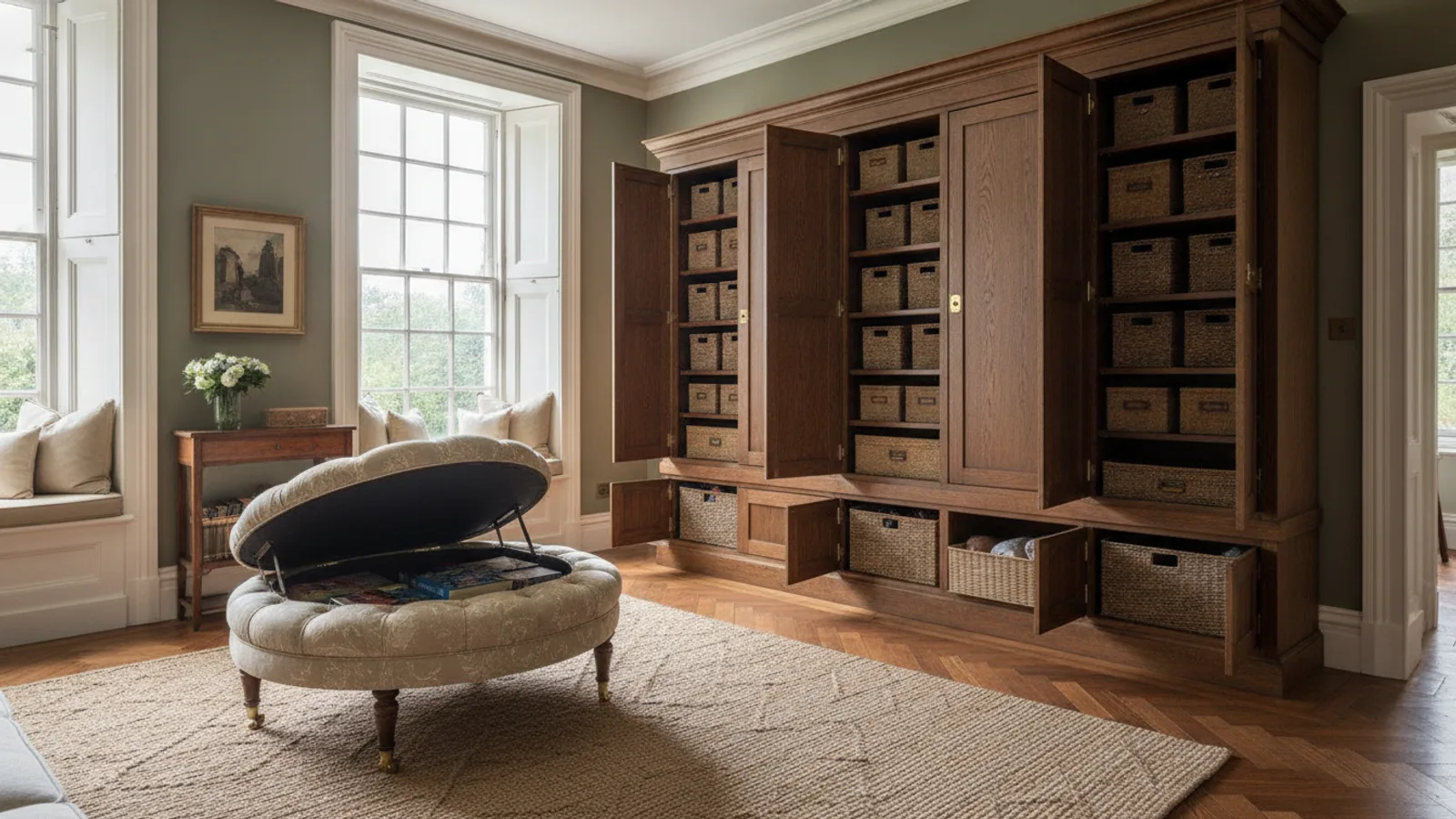
For the ultimate period home storage, consider commissioning bespoke joinery. While a higher initial investment, custom pieces crafted by a skilled cabinetmaker or joiner can be designed to fit every curve, alcove, and unusual dimension of your home perfectly. They can replicate existing mouldings, cornices, and architectural details, making the storage look original to the property. This level of customisation ensures that storage doesn't just fit but enhances the architectural integrity and value of your home. Think beyond standard cupboards – imagine a hidden bar within a bookcase, a fold-down desk seamlessly integrated into a living room wall, or a utility cupboard designed to blend with a paneled hallway.
Utilise Attic and Cellar Spaces Smartly
Attics and cellars, often dusty and neglected, can be transformed into valuable, climate-controlled storage areas. For attics, ensure proper flooring, lighting, and insulation to protect stored items from extreme temperatures and damp. Consider installing modular shelving systems that can adapt to sloped ceilings. Cellars can be excellent for wine storage or items that require a cooler environment, but ensure they are properly waterproofed and ventilated. While not always easily accessible, these spaces are perfect for long-term storage of seasonal decorations, archived documents, or inherited furniture.
Integrate Smart Home Technology Discreetly
Modern period living often involves smart home technology, but bulky gadgets can detract from a traditional aesthetic. Plan your storage to discreetly house tech. For example, a built-in media unit can conceal sound systems, gaming consoles, and charging stations behind period-style cupboard doors. Router and modem can be hidden inside a decorative box on a shelf or within a drawer, with discreet cable access. Even smart lighting controls can be integrated into traditional-looking switch plates. The goal is to enjoy modern conveniences without compromising the historical charm.
Create Hidden or Secret Storage Compartments
For a truly unique and secure approach, consider incorporating hidden storage. False drawer fronts that reveal a secure compartment, secret panels in bookcases, or lift-up floor sections can be used to store valuables, important documents, or items you want to keep out of sight. This harks back to historical features often found in grand houses and adds an element of intrigue. This level of customisation requires specialist craftsmanship but can add significant character and security.
Design Multi-Functional Rooms with Flexible Storage
Given the often smaller room sizes in period homes, flexible, multi-functional rooms are key. Design storage that supports these dual purposes. A spare room that serves as both a guest bedroom and a home office might have a wall-bed that folds away into a cupboard, revealing a desk and integrated shelving system. A dining room could feature a sideboard that doubles as a craft station with cleverly organised drawers. This approach requires thoughtful planning but maximises the utility of every square foot.
Period Home Storage Ideas FAQ
Q: Can I really have modern storage in a period home without it looking out of place?
Q: How can I add storage without damaging original plasterwork or mouldings?
Q: What are the best materials for storage in a period property?
Q: My period home has uneven walls and floors. How does this affect storage?
Q: Is it okay to use contemporary storage solutions in some rooms?
Q: How do I deal with the lack of storage in small period bathrooms?
Final Checklist for Period Home Storage Ideas
- Thoroughly assessed your home's unique features, alcoves, and high ceilings.
- Ruthlessly decluttered all unnecessary items before planning new storage.
- Identified opportunities for built-in solutions in alcoves and recesses.
- Planned to maximise vertical space with tall units or shelving.
- Considered utilising awkward spaces like under stairs and narrow nooks.
- Looked for multi-functional furniture with integrated storage (e.g., ottoman beds, window seats).
- Chosen materials and styles that respect and complement your home's period aesthetic.
- Designed discreet storage for kitchens and bathrooms, prioritising integration.
- Established a plan for ongoing organisation and maintenance to keep spaces tidy.
- Consulted specialists (conservation officers, carpenters) where structural changes or bespoke work are needed.